Mikä tekee pyöreäselkäisestä puisesta tuolista erilaisen
Pyöristetyn selkänojan määrittelee sen kaareva selkänoja, joka noudattaa selkärangan luonnollista muotoa litteiden, suorien säleiden sijaan. Tämä muotoilu ei ole vain tyylivalinta – se muuttaa sitä, miltä tuoli tuntuu istua, miltä se näyttää huoneessa ja jopa miten se on rakennettu. Sen sijaan, että yhdistäisivät suoria puukappaleita terävistä kulmista, käsityöläiset taivuttavat tai muotoilevat puuta sileäksi kaareksi, mikä vaatii enemmän taitoa, mutta johtaa tuoliin, joka tuntuu pehmeämmältä silmiin ja usein mukavammalta selkää vasten.
Löydät pyöristetyt puiset tuolit useissa huonekalutyyleissä klassisista Windsor-tyylisistä ruokatuoleista moderniin minimalistiseen muotoiluun. Niitä yhdistää se kaareva siluetti, joka pyrkii pehmentämään huoneen yleisilmettä laatikkomaisiin, kulmikaskalusteisiin verrattuna.
Kaarevan selkänojan mukavuusedut
Yksi suurimmista syistä, miksi ihmiset valitsevat a pyöreä selkänoja puinen tuoli Litteäselkäisen vaihtoehdon sijaan on mukavuutta pitkiä istuma-aikoja. Selkänojan kaarre on usein muotoiltu noudattamaan yläselän ja hartioiden luonnollista ääriviivaa, mikä auttaa jakamaan painetta tasaisemmin sen sijaan, että se keskittyisi muutamaan tasaiseen pisteeseen.
Miksi käyrä on tärkeä asennon kannalta
- Seuraa selkärangan luonnollista käyrää eikä pakota jäykkää asentoa
- Vähentää painepisteitä, jotka voivat aiheuttaa epämukavuutta pitkien aterioiden tai työskentelyn aikana
- Kannustaa rennompaan, luonnollisempaan istuma-asentoon
- Toimii hyvin ruokapöydän tuoleissa, joita käytetään pitkien keskustelujen tai tapaamisten aikana
Vaikka pyöreä selkänojallinen puinen tuoli ei korvaa ergonomista työtuolia, sen muoto todellakin tekee huomattavan eron litteisiin, suoraselkäisiin puisiin istuimiin verrattuna.
Yleiset puutyypit, joita käytetään pyöristetyissä selkätuoleissa
Pyöristetyn selkänojan puisessa tuolissa käytetty puutyyppi ei vaikuta pelkästään sen ulkonäköön, vaan myös sen kestävyyteen, painoon ja hintaan. Jotkut puulajit taipuvat helpommin valmistuksen aikana, mikä on tärkeä tekijä tämän tunnusomaisen kaarevan muodon saavuttamisessa.
| Puutyyppi | Ominaisuudet | Paras |
| Tammi | Vahva, raskas, kestävä jyväkuvio | Ruokailutilat, pitkäaikainen käyttö |
| Pyökki | Taipuu hyvin, sileä lopputulos | Klassiset kaarevat mallit, kuten Windsor-tuolit |
| Pähkinä | Rikas väri, ensiluokkainen ulkonäkö | Lausuntokappaleet, korostustuolit |
| Pine | Kevyt, edullisempi | Budjettiystävälliset tai rennot asetukset |
Jos kestävyys on ykkösprioriteettisi, tammi- tai pähkinäpuiset pyöreät selkänojat kestävät yleensä hyvin yli vuosien päivittäisessä käytössä, kun taas mänty tarjoaa kevyemmän ja edullisemman vaihtoehdon arkisiin tiloihin.
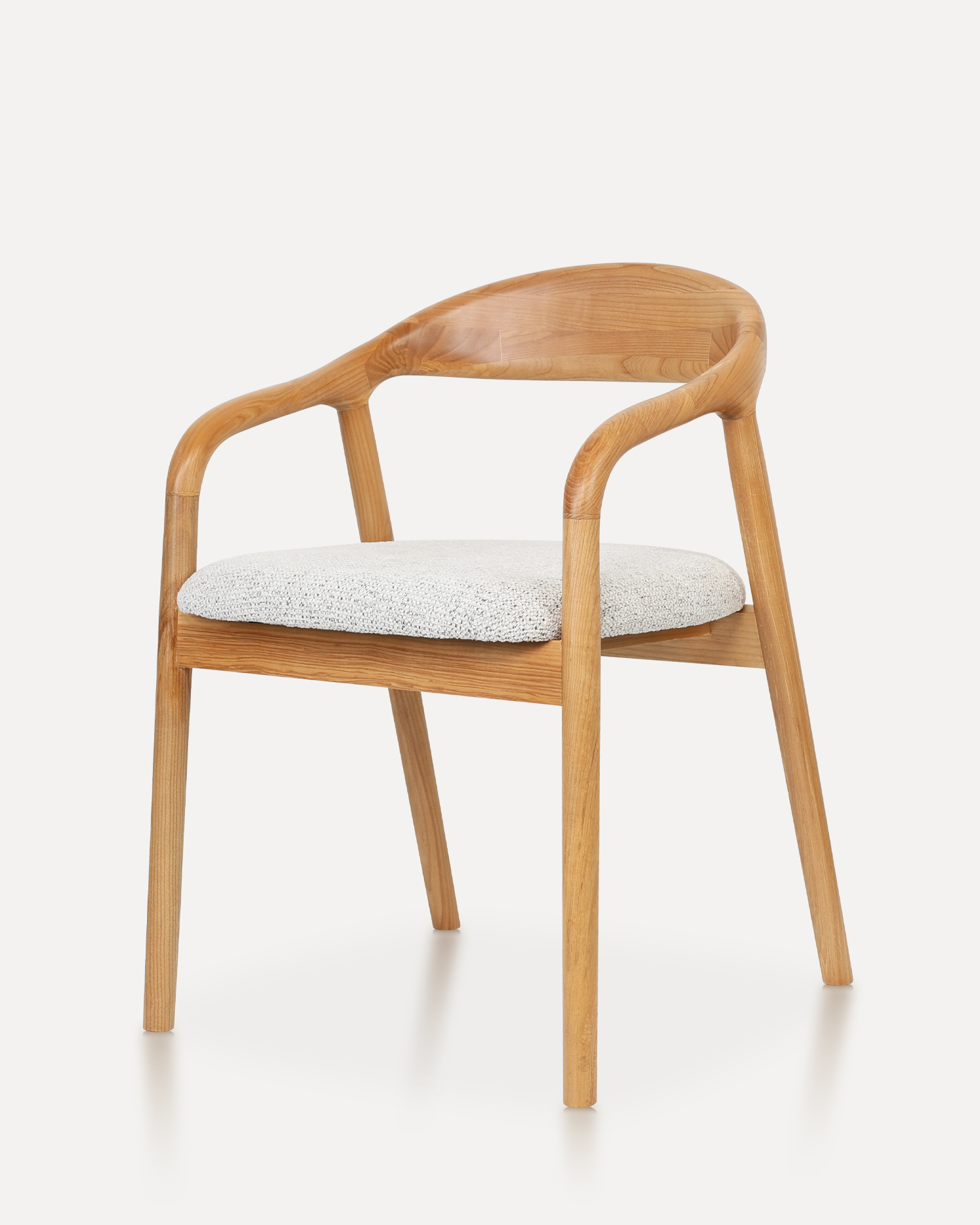
Mihin pyöreäselkäinen puinen tuoli sopii parhaiten
Monipuolisen, ajattoman ulkonäön ansiosta pyöreä selkänojallinen puinen tuoli sopii useisiin eri huoneisiin ja tyyleihin. Sen pehmeä siluetti sopii hyvin sekä perinteiseen että moderniin sisustukseen, mikä on osa sitä, miksi muotoilu on pysynyt suosittuna niin pitkään.
Suosittuja sijoitusideoita
- Ruokailuhuoneet – kokonaisena tai sekoitettuna penkin kanssa rentouttavan ilmeen saamiseksi
- Kotitoimistot – yhdistettynä puiseen työpöytään, joka luo lämpimän ja klassisen tunnelman
- Lukukulmat — yksikorkeisena tuolina pienellä sivupöydällä
- Sisäänkäynnit – yksinkertaisena, toimivana istuimena lähellä etuovea
- Keittiönurkkaukset – yhdistettynä pieneen pyöreään pöytään viihtyisäksi aamiaispaikaksi
Kaareva muoto vie myös visuaalista tilaa hellävaraisemmin kuin laatikkohuonekalut, joten se on fiksu valinta pienempiin tiloihin, joissa et halua painavia, kulmikkaita kappaleita hallitsevan ulkoasua.
Kuinka valita oikea pyöreä selkänojallinen puinen tuoli
Saatavilla on niin monia tyylejä, joten oikean pyöristetyn selkänojan puinen tuoli sovitetaan yhteen tilaan, käyttötarpeisiisi ja budjettiisi. Muutama käytännön seikka voi auttaa rajaamaan vaihtoehtojasi.
- Mittaa tilasi varmistaaksesi, että tuolin kaareva selkänoja ei työnty hankalesti seinää tai pöytiä vasten
- Testaa käyrän syvyyttä henkilökohtaisesti, jos mahdollista, koska jotkut selät ovat selvempiä kuin toiset
- Harkitse, haluatko käsinojat, mikä voi vaikuttaa tuolin istumiseen pöydän alle
- Tarkista viimeistely ja tiivisteen laatu, varsinkin jos tuolia käytetään päivittäin
- Yhdistä puun sävy olemassa oleviin huonekaluihisi saadaksesi yhtenäisen ilmeen
Kun käytät muutaman ylimääräisen minuutin tarkistaaksesi nämä tiedot ennen ostamista, voit säästää sinua joutumasta tuoliin, joka näyttää hyvältä kuvissa, mutta ei sovi tilaan tai päivittäiseen rutiiniin.
Pyöreäselkäisen puisen tuolisi hoitaminen ajan myötä
Kaarevat saumat puukalusteet vaativat hieman enemmän huomiota kuin yksinkertaiset litteät osat, lähinnä siksi, että taivutettu tai muotoiltu puu voi olla herkempi kosteuden ja lämpötilan muutoksille.
Perushuoltovinkkejä
- Pyyhi pöly säännöllisesti pehmeällä, kuivalla liinalla estääksesi kerääntymisen kaareviin uriin
- Vältä sijoittamasta tuolia lähelle suoria lämmönlähteitä tai tuuletusaukkoja, jotka kuivattavat puuta
- Levitä puulakkaa tai hoitoainetta muutaman kuukauden välein viimeistelyn säilyttämiseksi
- Tarkista nivelet ajoittain löysyyden varalta, erityisesti kaarevien selkänojan liitosten kohdalla
- Käytä tuolin jaloissa huopapehmusteita suojaamaan sekä tuolia että lattiaa
Hyvin tehty pyöreä selkänojallinen puinen tuoli voi kohtuullisella huolella kestää vuosikymmeniä, ja siitä tulee usein kappale, joka saa luonnetta vasta puun ikääntyessä.
Viimeisiä ajatuksia tämän ajattoman tuolityylin valitsemisesta
Pyöreä selkänojallinen puinen tuoli tarjoaa harvinaisen yhdistelmän mukavuutta, kestävyyttä ja ajatonta tyyliä, joka sopii mukavasti melkein mihin tahansa kotiin. Olitpa sitten sisustamassa ruokasalia, perustamassa viihtyisää lukunurkkausta tai yksinkertaisesti etsimässä tuolia, joka tuntuu yhtä hyvältä kuin se näyttää, kaareva selkänojan muotoilu on osoittanut itsensä huonekalujen valmistuksessa sukupolvien aikana.
Kun käytät aikaa oikean puun, koon ja viimeistelyn valitsemiseen omaan tilaan, saat kaiken irti tästä klassisesta suunnittelusta. Muuten yksinkertaisen tuolin kappaleen, jonka käytöstä nautit vuosia.


 English



 Instagram
 Facebook
 LinkedIn